Multi-Specialty Integration: The Operating Model Most Platforms Skip
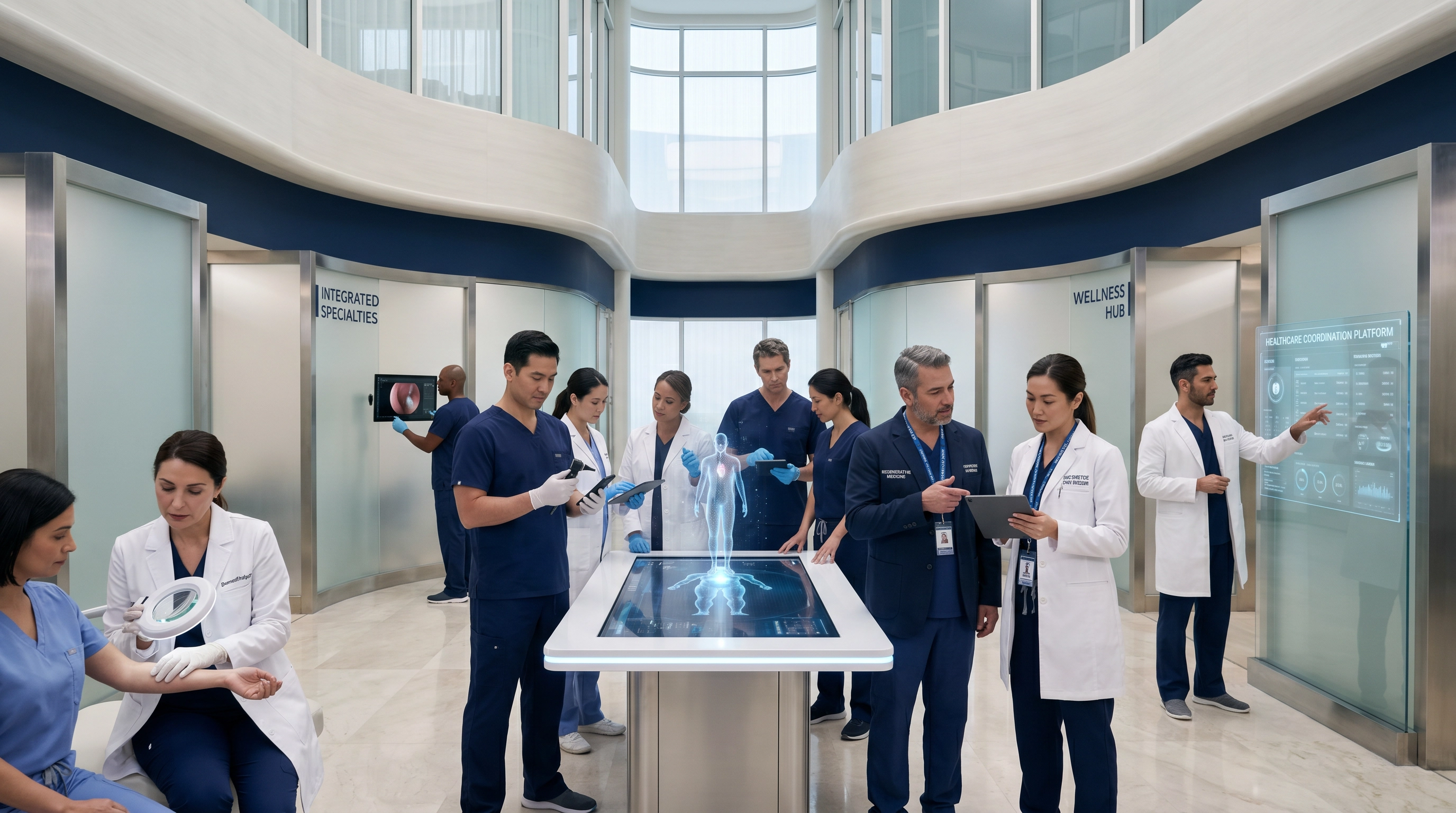
Multi-specialty integration is an operating model, not a marketing line. Real integration requires a documented clinical handoff protocol between specialties, a shared standard of care across brands, a unified data architecture so a patient's history travels with them, and physician-led governance over the standards themselves. Most 'integrated' platforms have none of those four.
The phrase integrated multi-specialty care shows up in nearly every healthcare-platform deck written in the last ten years. In practice, the integration is almost always organizational rather than clinical: shared back-office, shared real estate, occasionally shared marketing. Patients still re-tell their history to every specialist. Specialists still send faxes to each other. Outcomes data still lives in five different systems.
ZMD Group's integration model starts from the opposite premise. The platform's clinical governance — chaired by Dr. Zandifar — sets a single, documented standard of care across the family of brands and across acquired practices. A unified patient data layer makes a patient's full ZMD Group history available to any treating physician inside the platform, with the patient's consent and under HIPAA-compliant access controls. Specialty-to-specialty handoffs are protocolized, not improvised. The result is a multi-specialty experience patients can actually feel: continuity, coherence, and a sense that the platform behind their care knows them as a person, not just as a CPT code.
Written for ZMD Group Editorial. Inquiries: [email protected].